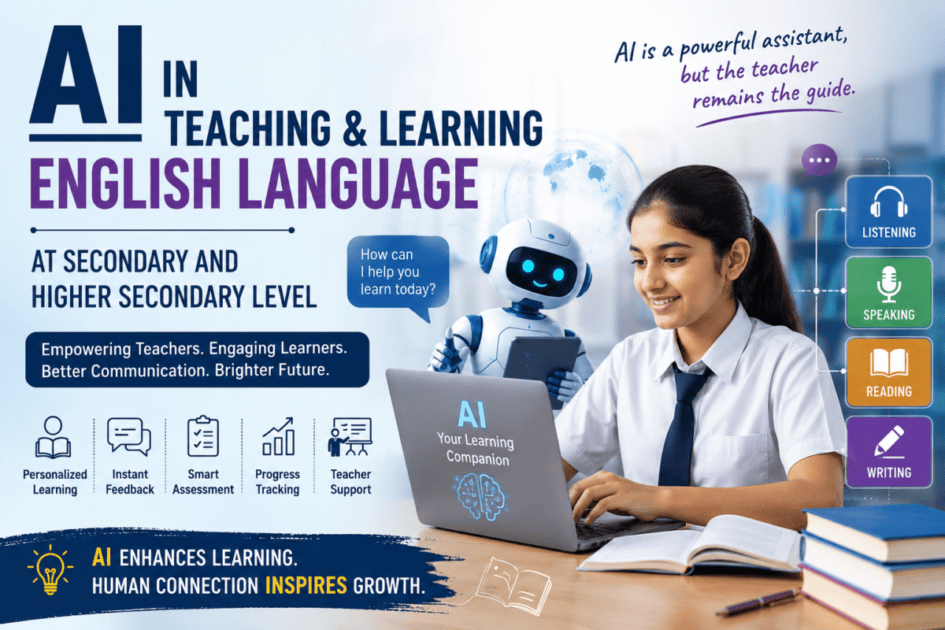
AI in Teaching and Learning English Language at the Secondary and Higher Secondary Level
AI in English Language Education: A New Era of Learning
Artificial Intelligence (AI) is transforming education across the globe, and English language teaching is no exception. At the secondary and higher secondary levels, AI offers innovative opportunities to make learning more engaging, personalized, and effective. Rather than replacing teachers, AI serves as a powerful teaching assistant that helps educators create meaningful learning experiences while enabling students to develop essential language skills.
Why AI Matters in English Language
Teaching English is not merely a school subject; it is a language that develops through continuous practice in listening, speaking, reading, and writing (LSRW). AI provides learners with instant feedback, interactive practice, and personalized learning paths, allowing them to improve these four language skills at their own pace.
How AI Supports the Four Language Skills
1. Listening Skills
- AI-powered tools can:-
- Generate audio in different English accents.
- Create listening comprehension exercises.
- Adjust the difficulty level according to students’ abilities.
- Provide instant feedback on listening tasks.
2. Speaking Skills
- Students can:-
- Practice conversations with AI chatbots.
- Improve pronunciation through speech recognition.- Build confidence by participating in simulated real-life situations.
- Receive immediate corrections and suggestions.
3. Reading Skills
- AI helps students:-
- Summarize lengthy passages.
- Learn vocabulary in context.
- Answer comprehension questions.
- Access texts suited to their reading level.
4. Writing Skills
- Students can use AI to:-
- Improve grammar and sentence structure.
- Expand vocabulary.
- Organize ideas logically.
- Edit essays and reports while understanding their mistakes.
- Teachers should encourage students to use AI as a learning guide rather than simply copying AI-generated content.
Benefits of AI for English Teachers
- AI reduces routine work and enables teachers to focus more on teaching and mentoring. It can assist teachers in:-
- Creating lesson plans.
- Designing worksheets and quizzes.
- Preparing question papers.
- Generating reading passages.
- Creating grammar exercises.
- Developing presentations.
- Producing visual teaching aids.
- Preparing speaking activities and role plays.
- Providing differentiated instruction for mixed-ability classrooms.
AI Tools Useful for English Teachers
- Some widely used AI tools include:-
- ChatGPT for lesson planning, explanations, and content creation.
- Google Gemini for research and educational content.
- Microsoft Copilot for productivity and writing assistance.
- Canva AI for presentations, posters, and classroom visuals.
- Grammarly for improving writing.
- ElevenLabs for natural voice generation.
- Google NotebookLM for organizing study materials.
- Quizizz AI and Kahoot! AI for interactive assessments.
AI Activities for Secondary and Higher Secondary Students
- Teachers can design engaging classroom activities such as:-
- AI-assisted debates.
- Story completion exercises.
- Dialogue writing.
- Vocabulary games.
- Grammar correction challenges.
- Email and report writing.
- Speech preparation.
- Interview practice.
- Group discussions.
- Creative writing using AI prompts.
- These activities encourage communication, creativity, and critical thinking.
AI in Assessment
- AI enables teachers to:-
- Generate multiple versions of question papers.
- Create objective and subjective assessments.
- Analyze student performance.
- Identify learning gaps.
- Provide personalized feedback.
- Track individual student progress over time. However, teachers should always review AI-generated assessment materials before using them.
Responsible and Ethical Use of AI
- While AI offers numerous benefits, responsible use is essential. Students should:-
- Verify AI-generated information.
- Avoid plagiarism.
- Cite AI assistance when appropriate.
- Develop independent thinking.
- Protect personal information while using AI platforms. Teachers should emphasize that AI is a learning companion, not a substitute for human effort or creativity.
Challenges of AI Integration
- Schools may face certain challenges, including:- Unequal access to digital devices and the internet.
- Overdependence on AI tools.
- Inaccurate or misleading AI responses.
- Privacy and data security concerns.
- Need for teacher training in AI literacy. Addressing these challenges requires proper planning, digital awareness, and continuous professional development.
The Future of English Language Teaching
AI will continue to reshape English classrooms by making learning more personalized, interactive, and accessible. The role of the teacher will evolve from being primarily an information provider to a facilitator, mentor, and guide who helps students think critically, communicate effectively, and use technology responsibly.The future belongs to teachers who combine human creativity, empathy, and pedagogical expertise with the intelligent use of AI tools.
Artificial Intelligence is revolutionizing English language education at the secondary and higher secondary levels. When integrated thoughtfully, AI enhances the teaching-learning process by supporting personalized learning, improving language proficiency, and reducing teachers’ workload. Nevertheless, the heart of education remains the teacher. AI can generate ideas and provide feedback, but only a skilled teacher can inspire curiosity, nurture confidence, and cultivate lifelong learners.As educators, our goal should not be to compete with AI but to leverage its potential to create engaging, learner-centered English classrooms where technology complements—not replaces—the human touch.